
In 2023, I left my job as a creative director. Well, to be honest, I got fired. The company let me go.
I was proud of my work there. I grew so much there. But you know, things happen. No hard feelings. I'm still in touch with people there, and I'm thankful for those years.
It can happen to you too. Maybe it already has. And that's okay. It happens to a lot of designers, and it says nothing about how good you are.
When it ended, I kept asking myself one question. Was this a blessing or a curse? It depends on how you look at it. I chose to see it as a lesson. Hard days are not only bad. They can teach you something new about your life.
But here's the part that hurt the most. When you work in a job, you give it your energy. Your time. Your life, really. Then one day you move on, and you have to start everything from scratch. New people. New culture. New life. That's the saddest part, to be honest with you.
I had freelanced for years by then. But never seriously. I made some money, sure. I just never built anything that lasted. That day felt different. I made a promise to myself. This time, I take freelancing seriously. Not as a freelancer. As a solopreneur. No more excuses. Just start working.
Maybe you've made a promise like that too, and it didn't stick. That's normal. A promise needs small habits behind it, or it fades in a week.
What most of us get wrong
Most of the time, we treat freelancing like a side job. Not a business. And that's the biggest mistake.
When it's not a business, you're not accountable to anyone. You get paid. You enjoy it. Then you go looking for the next client. Nothing repeats. Nothing grows. Your work just flows with your mood. I did this for years. Until I changed three things.
1. I changed how I saw myself
The biggest change happened in my head. I stopped seeing myself as just a freelancer. I started seeing myself as a business owner.
I still remember a TEDx talk I watched around then. A woman on stage said something that stuck with me.
When nobody is hiring you, hire yourself.
So I hired myself. I set work hours. I built a proper workspace. I showed up every day, at the same time. No more working whenever I felt like it. No more designing only when inspiration hit. You might say, I already work hard. I did too. I just worked at random times. Things started to move fast. I didn't work longer. I just showed up on purpose.
Think about it. Would you hire someone who only works when they feel like it? Your clients wouldn't either. You don't need an office. A corner of your room is enough. What matters is that you decide when work starts and when it stops. Then you keep that promise to yourself, the same way you'd keep it to a client. Start small. Pick your hours for next week and write them down. That's it.
But showing up every day brings a new problem. More work means more to keep track of.
2. I put everything in one place
My next problem? I was a complete mess. My emails were everywhere. I missed follow-ups. I forgot what I had talked about with clients. Maybe your inbox looks like that right now.
Then one day, a friend asked me a simple question. Why aren't you using a CRM to manage your clients? As a designer, I had no idea what that meant. It's just a place to keep track of your clients. So I tried Airtable and HelloBonsai. Things got easier. I could follow up with clients, send proposals and see what I earned in one look.
But I was still jumping between too many apps. So I built one simple place for everything. Every client chat. Every follow-up. Every proposal and invoice. Every dollar earned.
And here's what surprised me. Having a system made me more creative, not less. When your mind isn't busy remembering everything, it's free to do the work you love.
You don't need my tools. A simple spreadsheet works. What matters is that you can open one place and see three things. Who you talked to. Who is waiting for your reply. Who still owes you money. If you can't answer those in one minute, your business is running you, instead of you running it.
3. I set clear price rules
Even with a better mindset and a better system, I still had a money problem. So I made two simple rules.
Rule one. I set my lowest rate at $250 an hour. I never go below it. Ever. Even if it means saying no to a project. Rule two. I raise my price with each new client. If client A pays $250, client B hears $300. Later I switched to fixed project prices. But I still count my hours. That way I never earn less than $250 an hour.
You don't need my numbers. You need your own. Pick the lowest rate you'll accept, and protect it. You might feel scared to set a lowest price. What if clients leave? Some will. That's okay. The ones who stay are the ones who respect your time. And every client you say no to makes room for a better one. How I picked $250 is a longer story. I'll tell it in a future letter.
Getting fired in 2023 felt like the end. It turned out to be the beginning. I'd been treating freelancing like a side job, and the day I treated it like a business, everything changed.
From nothing to something is possible.
Are you treating your freelance work like a business, or like a side job? Hit reply and tell me.
See you in another one!
Let's grow together 🙌
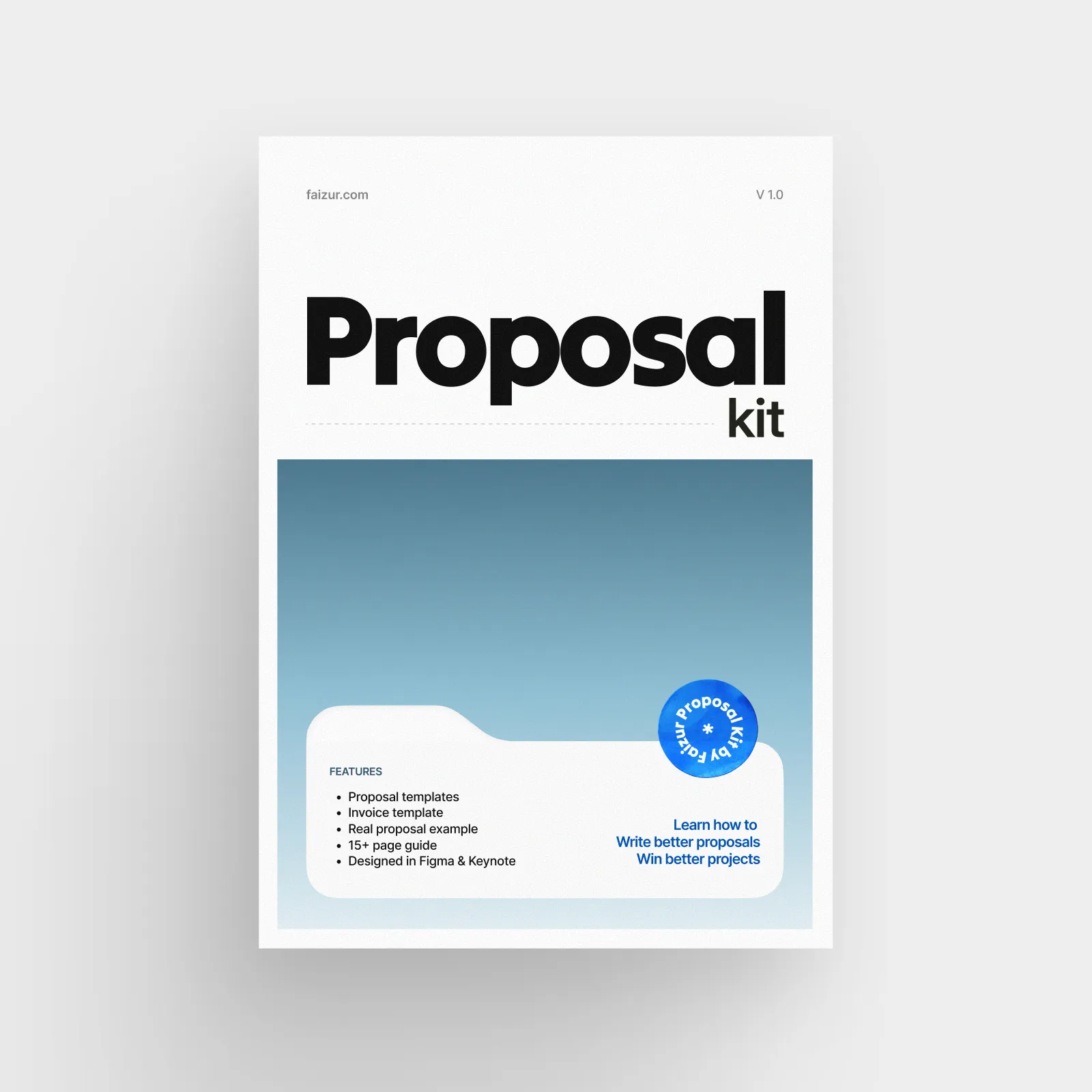
P.S. If you want to see how I put a price into a proposal so clients take it seriously, it's all in the Proposal Kit.