


Last week, a designer sent me a message.
It's not working. I think I'll go back to a job.
Maybe you've felt the same this year. That's okay. I was in the same place in 2016. No proper system. No clients. Not even one lucky break. And I had no idea why.
Here's what I didn't see back then. Freelancing gives you freedom. But that same freedom comes with pressure. Suddenly you have to figure out everything on your own. Clients. Money. Systems. Growth.
And when nothing is in place, it feels like nothing is working. You try harder. You post more. You send more messages. And you still have no clients and no leads. Most of the time, your design is fine. You just haven't set up the business part yet.
These are the basics I wish someone had told me when I started.
Decide what you sell
Look at your portfolio right now. Does it try to do everything? Logos, websites, apps, branding, and so on?
When a client lands on your site and sees all of that, they get confused. You come across as a jack of all trades, and that's when their confidence drops. They can't tell what you're best at, so they don't know what to hire you for.
So pick one thing. It can be website design, app design or landing pages. Whatever it is, make your words and your work say the same thing. If your words say websites and your work shows websites, a client gets it in a few seconds.
Think of two designers. One takes every kind of project, an app one month, a website the next, a brand after that. The other only does landing pages. The second one gets faster with every project. They can explain what they do in one line. And they're a lot less stressed. Focus looks like experience to a client.
But picking one thing means nothing if your portfolio still shows ten.
Keep your portfolio simple
You're probably overcomplicating your portfolio. I did too. You don't need 20 projects. You need 2 or 3 strong case studies, and even those don't need long breakdowns.
Your portfolio needs four things:
- Who you are
- Your work
- How you help
- What to do next
That's it. People don't read. They scan. You have a few seconds to show them who you are and what you do.
But what if clients do come, and you still feel broke and busy?
Think like the owner
If you treat freelancing like a side gig, that's the biggest problem. I'll make money whenever I want. I'll work when I feel like it. It sounds like freedom. But it's also why so many designers quit. They have a few slow months, and they decide freelancing doesn't work. Most of the time, freelancing works fine. The way we treat it doesn't.
Client work is only half of it. The other half is running a small business. So set clear limits. Charge what your work is worth. And keep showing up, even in the quiet months. In practice, that can be very small things. Working set hours instead of whenever. Sending a proposal instead of a price in a chat message. Asking for a deposit before you start. Following up when a client goes quiet. None of these feel exciting, and all of them are what an owner does.
An owner also writes things down. That's the next part.
Keep everything in one place
Every real business runs on a system. Yours should too. You need one place to track your clients, your leads, your proposals and your invoices. Who do you need to call back? What do you need to send? Who still owes you money? If all of that lives in your head, you have no room left to grow.
I kept everything in my head for years. I forgot to follow up with clients. I missed payments. I felt overwhelmed all the time. The day I put everything in one place, my clients, my leads, my money, things changed. I stopped guessing and started growing. And I don't use expensive tools. Simple is enough, as long as you actually use it.
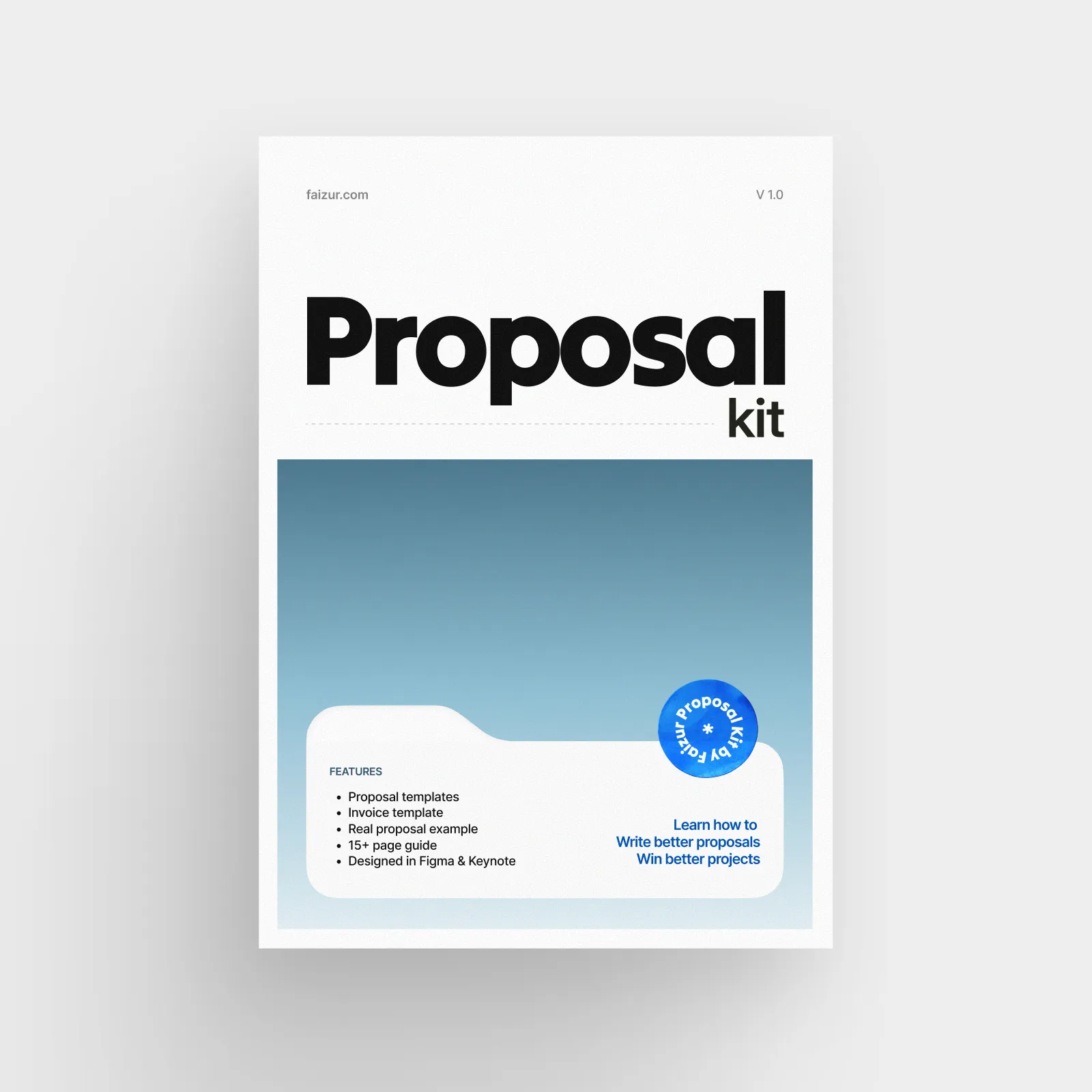
What goes in that one place? And how do you follow up without feeling pushy? That's a whole letter on its own. I lost more work there than anywhere else.
Even then, one thing can still go wrong. People like your work, and then they don't know what to do next.
Tell people what to do next
Just posting your work isn't enough. People see it, like it, and then don't know where to go. So every time you share something online, add one clear next step. Here's my website. Here's how to work with me. Reply if you need this.
One line in my posts used to bring a lot of my clients. Need a website? Here's my work. People read the post, they like it, and now they know exactly where to go. If you don't tell them, they won't find you.
If you don't have a website yet, that's fine. A simple form is enough. Let people reach out to you. It sounds small, but it's the difference between people admiring your work and people hiring you.
When it feels like nothing is working, it's usually not your design. It's the business around it that isn't set up yet, and that's the part nobody teaches.
Your design is fine. Set up the rest.
Which part is missing in your freelance work right now? Hit reply and tell me.
See you in another one!
Let's grow together 🙌
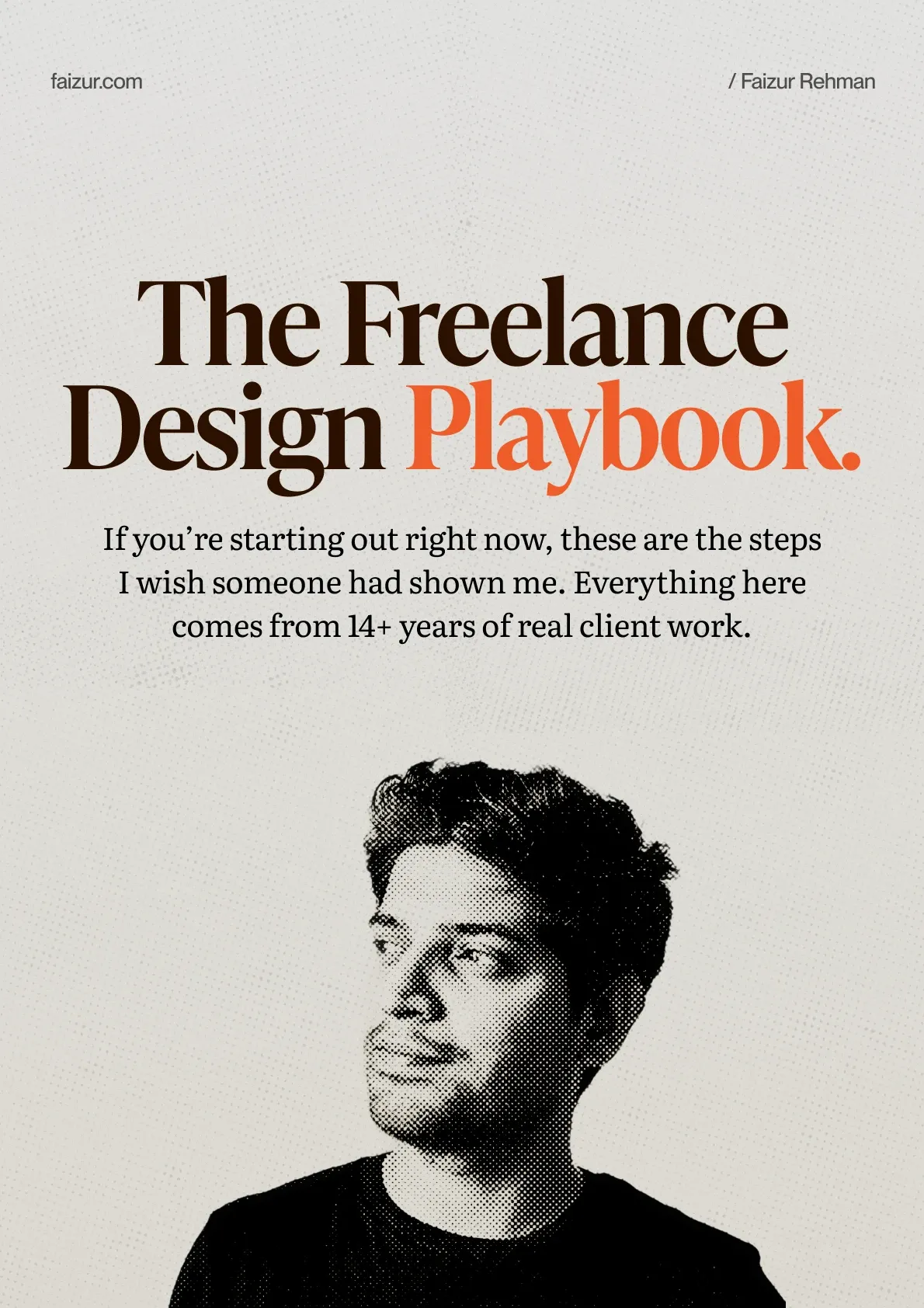
P.S. Want the rest of the setup? The free Freelance Design Playbook walks you through it, from your first position to your first client.